
A week with the Musahar community
We spent a week in Bihar, visiting Musahar tolas across three districts: Patna, Bhojpur, and Gaya. The Musahar are one of India’s most marginalised communities, classified as Mahadalits. We went to see the actual living conditions of the community, and to speak with the NGOs working alongside them, so we could think about how to help through those partners.
What we saw was a stark contrast to the baseline most of us take for granted as people from Kerala.
The tola
A Musahar tola in rural Bihar is a specific kind of settlement. Households cluster on the outskirts of a village, physically separated from the main habitation. Some homes are brick and cement. Most are mud, with roofs that do not quite hold. There is no drainage with limited availability of clean water sources.
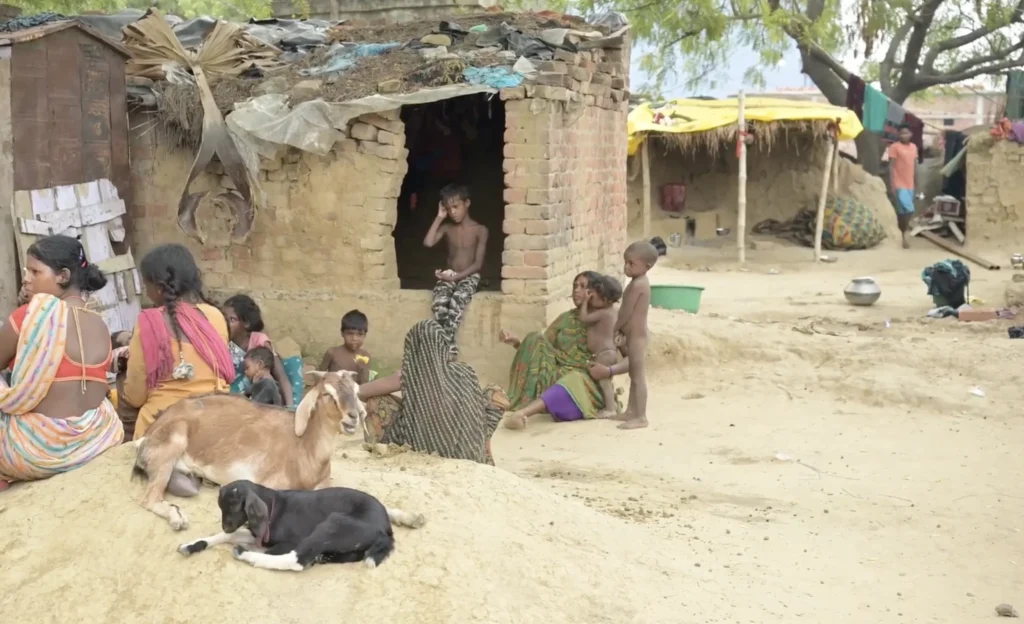
Walking through the tolas, we saw children running around with no care for the world. Women cooking in the open amongst flies. Men mostly absent, either at seasonal wage work nearby, or migrated to construction sites and brick kilns further away.
The tola often sits at the edge of the village, by design.
The history that shaped this
Two things sit under most of what we noticed in Bihar, and both connect back to what did not happen in the twentieth century. This is derived from the kerala lens with which we are looking at the current state of the community.
Land reform. Kerala’s land reforms in the late 1950s and 1960s dismantled the tenancy system and redistributed land to the people who worked it. It was slow, contested, and imperfect. But it happened. Bihar’s land reforms, on paper, tried to do the same thing. In practice, they did not. Most of the landed structure survived. The people who tilled the land did not become the people who owned it. Two generations later, this shows up as families still living on land they cannot legally claim, still afraid of eviction, still unable to build.
Caste. In Kerala, caste is present, but it is not on the surface in the same way. In rural Bihar, caste is visible in the geography of a village. The Musahar tola is at the edge because the caste put it there. Occupations, water access, marriage networks, who sits where at a public event, whose child gets called to answer in class. All of these still track caste in ways that are more legible than what most of us grew up around.
What we noticed, structurally
Several things repeated across the tolas we visited.
Literacy. Average literacy in the Musahar community is under 10 percent. Most of the children we met still do not attend school. Where they do attend, government school teachers have often written them off as unteachable and do not pay attention to them. The failure gets folded in as a failure of the community rather than the teachers, and the cycle continues.
For a community that has not been through education itself, the value of education is hard to argue for. It becomes harder still when graduate unemployment in India is at the level it currently is. A household is being asked to give up the income a child could earn today, in exchange for a schooling whose outcome is uncertain. From where they are standing, the math does not add up!
So are we really fighting a community’s lack of awareness? Or are we fighting a system that has not built an exit pathway strong enough to make that awareness worth acting on?
Hygiene, and why it is not what it looks like. The stigma of being Musahar is layered with a stigma of being “unhygienic”. This is worth being precise about. Water access is limited. Regular bathing is difficult. Most families have one or two sets of clothes, no place to store clean ones in a one-room mud house, no drainage, no toilet, no waste management. Hygiene in a Musahar tola is not a function of community habit. It is a function of infrastructure that does not exist. Outsiders often collapse the two, and the collapse becomes another reason to withhold services.
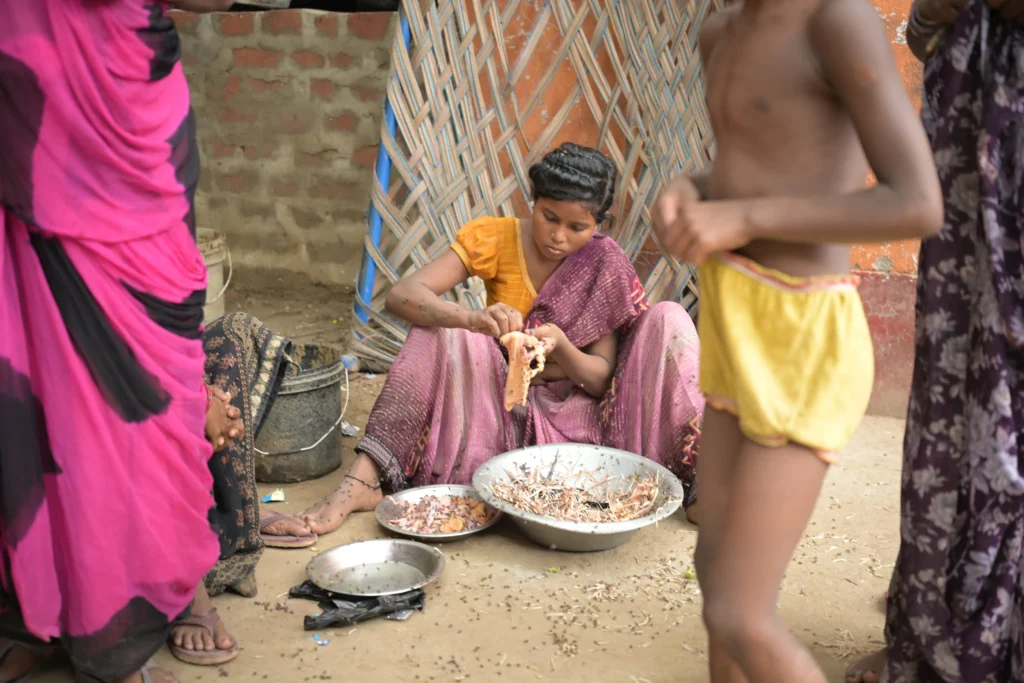
So who exactly do we blame? The community for not meeting a baseline requirement of civic life, or the system that chose not to provide the services that would make it possible?
Land insecurity. Many families are on land they cannot legally call theirs. Parwana, the homestead title, is still unfinished for large numbers of households. Without it, families cannot invest in the home, apply for housing schemes, or feel safe from eviction. Everything else sits on top of this.
Evictions in progress. In more than one location, we saw families living on the roadside. Not at a distance, in a slum somewhere far away. Right there, on the edge of the road, in makeshift shelters, having been moved off land they had lived on. This is not a historical injustice. It is a current one.
Livelihood. The community has very few means of survival. Bonded labour in the fields they live around is the primary source of income, and it is seasonal. Beyond that, construction sites and brick kilns further away. With no literacy and no vocational training, other kinds of work are almost impossible to enter.
Brewing, mahua, and children inside it. The Musahar community has long been associated with mahua-flower brewing, a tradition that predates any legal category. After Bihar’s alcohol ban, brewing itself became one of the common household livelihoods. Younger members of the community got pulled deeper into it, some as workers, some as consumers, and the ones who might otherwise be in school or at work stopped being in either place. In one tola we visited, a minor boy was working the brew, and the reality hit us harder than we would like to admit.
Women. The labour of survival falls disproportionately on women. Water, cooking, cleaning, care of the elderly and children, and often income-generating work as well. Sanitation absence hits them the hardest. Adolescent girls’ agency is very limited, structurally, given they are early to be married off and least preferred for formal education.
What we noticed about change
The children in the tolas we visited ran around unbathed, unclothed, with no visible care in the world. Not neglected, exactly. Just outside every civic system that would ordinarily reach them.
The same children, when they enter the residential schools run by Nari Gunjan, Nayee Asha, or Manthan, look like any other children. Eager to learn. Eager to play. Clean, well-behaved, curious about visitors. The contrast was stark, and it was the single most useful thing we saw all week.
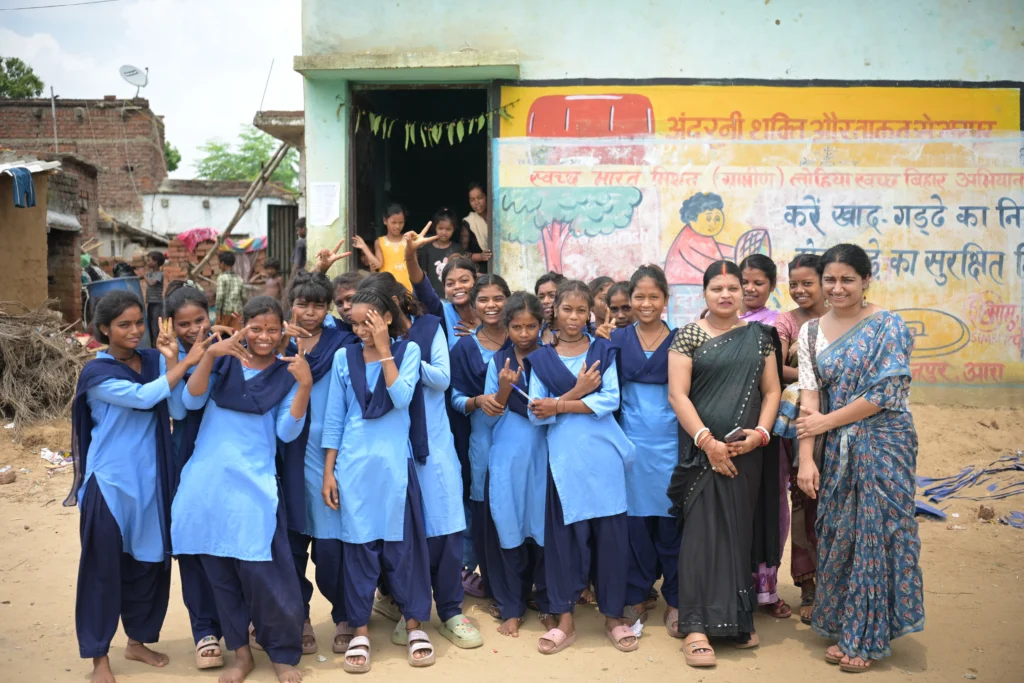
Change is possible. What it takes is not mysterious. It just does not happen automatically.
What we are now thinking about
Three approaches are emerging in our thinking.
One. Extend Nari Gunjan’s residential school. Sister Sudha Varghese’s Prerana Hostel model has been running for years, and there is a clear opportunity to complete it by adding a Class 11 and 12 wing, and folding in vocational training so that girls leave the hostel with a livelihood, not just a certificate.
Two. A whole-tola integrated upgrade. Deshkal Society is our clearest partner on this. Their approach works at the household level across a single tola. Helping families secure Parwana and homestead land rights. Filing PMAY housing applications. Documentation drives for Aadhaar, ration card, and Ayushman Bharat enrolment. Setting up a Community Learning Support Centre with Musahar tutors. Building small livelihood cooperatives.
Three. A combination of the two, in the same tola. The children of that tola go to the residential school, and return home to a household and community that is being structurally lifted at the same time. The daughter’s chance is protected. The family is not left behind. And each change supports the other.
We are still thinking about which one to go for. What we have already decided is that we will do what we can to help a community that has been left outside almost every civic system that should have reached it.
What we do not yet know
We spent one week in Bihar. That is not enough time to understand a community. It is enough time to know what we do not know.
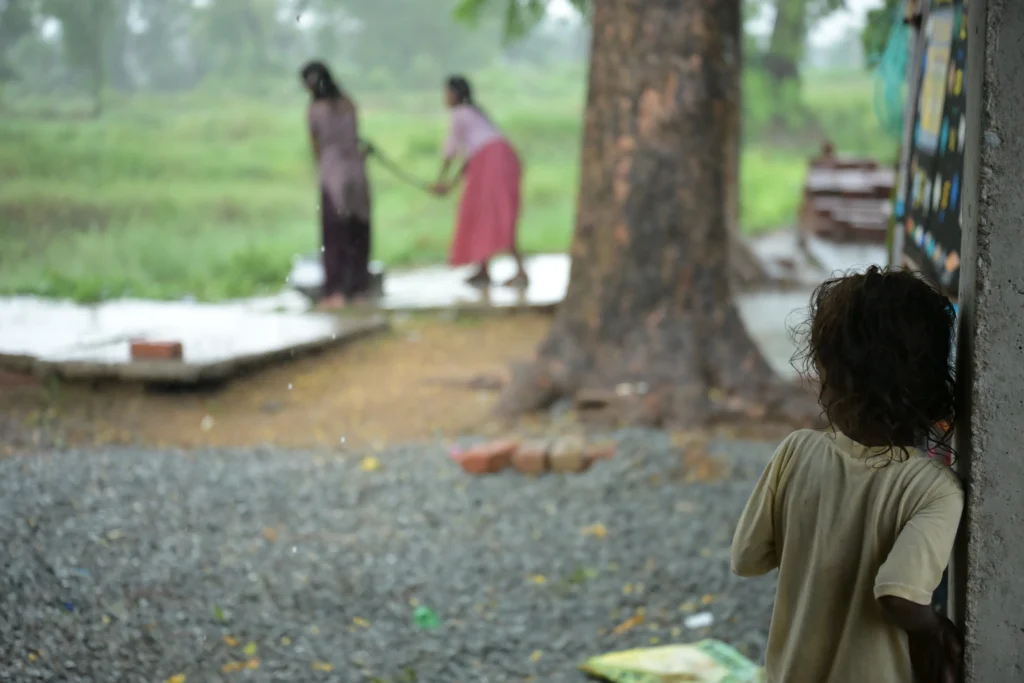
Photo by: Bibin Joseph
We do not yet know whether our Kerala instincts about state presence will help or mislead us here. We do not yet know how much the Musahar community wants an intervention shaped this particular way. We do not yet know how to coordinate two NGO partners with different working styles on the same tola. We do not yet know what the community’s own priorities would be if we asked them today, and we have not yet asked them properly.
That last one is the most important gap. We will come back to it, and we will come back to Bihar, before any of this is decided.
For now, this is what a week looked like, and this is where our thinking sits.

© 2026 Happiness Project. Kerala, India.