
Resilient Lanka: Our First Intervention
The place
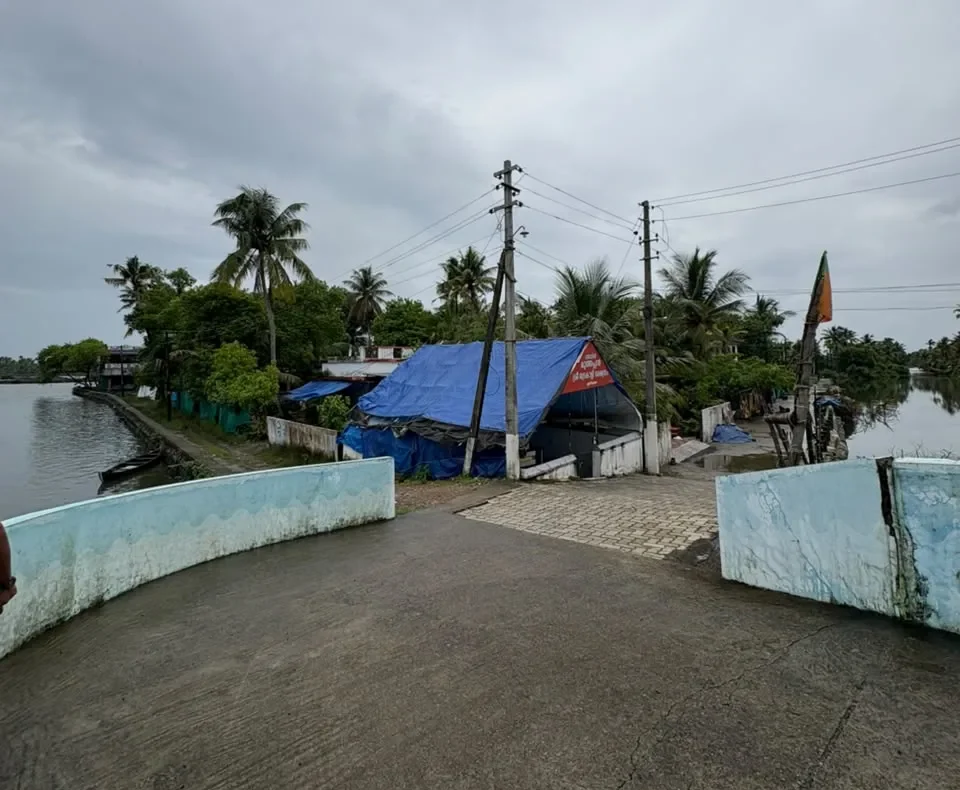
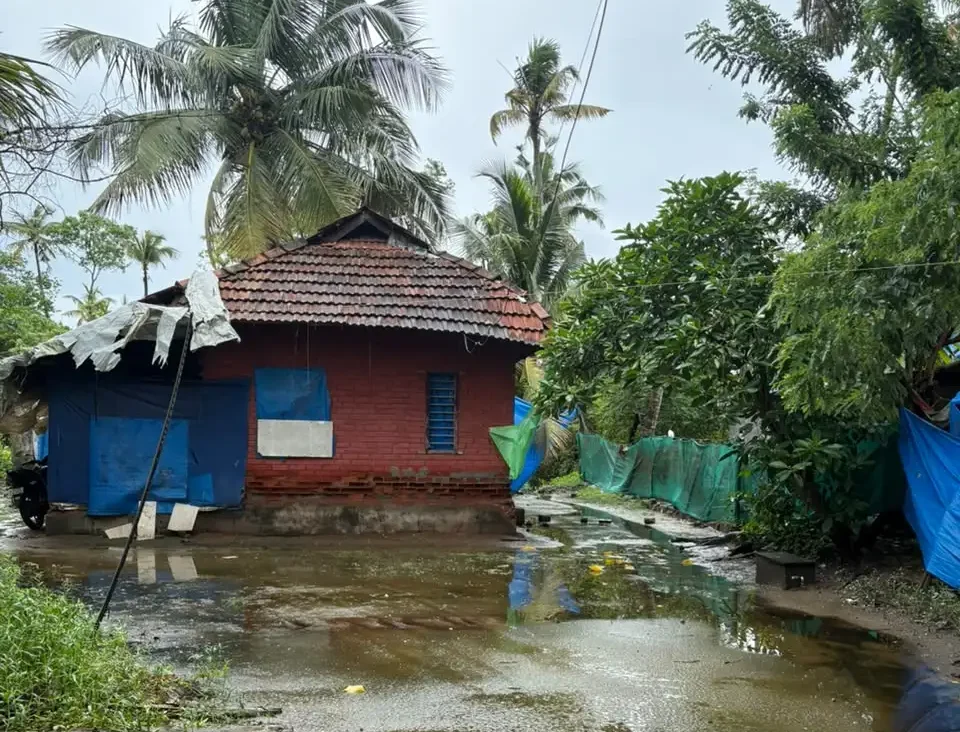
Over the last decade, the tide has been changing more often, and higher. Households now see repeated inundation of homes and compounds. Pokkali farming, which has been sustained for generations on the ability of the land to hold salt water and grow rice at the same time, is under strain in ways that older farmers do not remember from their own youth. Some households have quietly begun to leave. Others cannot.
The problem is not only water. It is the slow set of decisions a family has to keep making while the water keeps arriving. Do we raise the floor of the home again this year, or is it not worth it. Do we stick tiles to the walls to hide the crack on the walls? Do we send the child to a school on the mainland where transport becomes a daily gamble in the monsoon, or do we accept the interruption? Do we stay?
How this project came to us
EQUINOCT has been working alongside coastal communities in Kerala for over five years, on the specific question of how community-scale tidal flood resilience can be modelled, designed, and delivered. They operate the SeaSight tidal flood intelligence network, and have been engaging with the Ezhikkara area, its Panchayat, and its Community for several years before we knew any of this existed.
We chose to support Resilient Lanka because it aligns with how we think about our own work. It is small in scale, deep in engagement, technically grounded, and community-consented. If it succeeds, it becomes a model that other coastal panchayats in Kerala can adapt.
How the project is structured
The project runs in two phases, and we have committed to funding both, subject to Phase 1 completing on the terms below.
Phase 1, the Preparatory Phase, runs for three months. It covers baseline assessment, informed consensus building with the community through a documented FPIC (Free, Prior and Informed Consent) process, community co-design of the intervention package, and preparation of a Detailed Project Report that engineers, the Panchayat, and government departments can all work from.
At the end of Phase 1, the project has three things. A community that has said yes to what is being proposed, on the basis of a process that documented their questions and their conditions. A technically sound design that qualified engineers have certified. And a plan that the Panchayat and the relevant State departments have signed on to.
Phase 2, the Implementation Phase, runs for twelve months. It covers execution of the validated intervention package, community training on operation and maintenance, and handover of community-facing assets to the Panchayat.
Our commitment to Phase 2 is contingent on Phase 1 being completed against the criteria above.
Who is doing what
EQUINOCT Community Sourced Modelling Solutions is running the project. They are the technical and community co-design lead, and are responsible for the engineering, hydrology, sensor infrastructure, and the community FPIC process. They own the design of Resilient Lanka.
Nayaneethi Policy Collective (NPoC) is running the baseline assessment, the Theory of Change, the Monitoring, Evaluation and Learning framework, and the Impact Evaluation across baseline, midline, and endline stages. Their role is deliberately kept distinct from EQUINOCT’s, so that the evaluation of the intervention is done by a team that is not also the implementer.
Ezhikkara Grama Panchayat is the institutional partner, and the eventual custodian of community-facing infrastructure once Phase 2 is complete.
The Happiness Project funds the work, holds an editorial role in documenting it publicly, and monitors delivery against the terms of our agreements with EQUINOCT and Nayaneethi.
What we are documenting

© 2026 Happiness Project. Kerala, India.